
My Ideal Ferrari
Maranello has been in the news a bit of late

Ferrari has found itself in the news a bit this week, but this isn’t about the Luce, fascinating thought experiment though it is.
I’ve been fortunate in recent times to have sampled most of Ferrari’s current range, specifically the 849 Testarossa, 12Cilindri and Amalfi, in addition to driving the 296 GTB a couple of years ago. I’d like to tick the Purosangue off, too, though I won’t hold my breath for the F80.
Content on these drives can be found all over the place now and in the future (including some below), but it got me thinking about what I’d like from my ideal Ferrari.
Put simply, all these cars are now arguably too fast and too powerful. Like most other manufacturers - in fact, probably more so than almost any other manufacturer - Ferrari is forced to constantly one-up itself with each successive model when it comes to power and performance.
As a result, even the Amalfi, the ‘everyday’ grand tourer that effectively opens the brand’s range, offers 471kW/760Nm and is claimed to reach 200km/h in nine seconds. It is head-spinningly fast, yet consider the 12Cilindri has another 140kW and the Testarossa is more than 2.5sec quicker to 200km/h. It’s all rather absurd.
What is common to each car, however, is an incredibly high level of mechanical and electrical engineering. Whether it’s the ride comfort on big wheels, the delicacy of the stability control intervention or the mapping of the powertrains (naturally aspirated, turbo or hybrid), the clever folk at Maranello who make these cars are some of the best in the business.
This got me thinking: what if they were freed from the constraints of headline figures? What if the only KPI was driver enjoyment? What would the result be?
Unsurprisingly, my ideal Ferrari would be a mid-engined sports car, but what might be surprising is that it would have just six cylinders. The 296 GTB sounds absolutely beautiful, quite literally like a baby V12, but I’d be pulling the turbos off and using the trickery that allows the 12C’s F140 6.5-litre V12 to rev to 9500rpm.
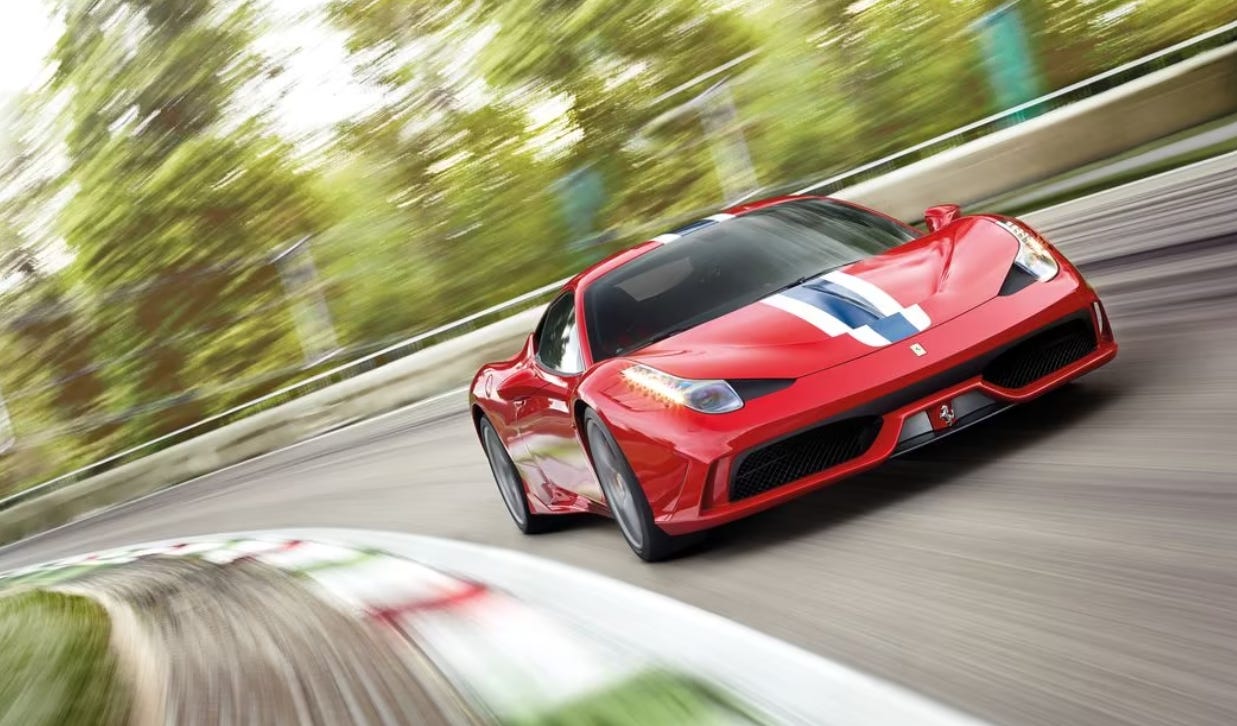
Ferrari proved more than a decade ago that it can extract 100kW/litre out of an atmo engine with the 458 Speciale, so even with the latest emissions regulations I’m betting it can do so again for 300kW from the 3.0-litre V6.
Would I keep the hybrid system? I’m on the fence. On the one hand, there’s the ~100kg weight saving; on the other, there’s the regulatory pressure, the ability to leave home silently and, most importantly, the low-end torque fill that - as with the LaFerrari - allows the engine specification to be totally focused on top-end fireworks. I think I’ll keep it.
Part of the reason is that while performance isn’t the priority here, asking buyers to shell out mega-bucks for a 300kW car is a tough sell. The 296’s tiny axial flux electric motor adds 122kW and 400kW-odd is a much more palatable figure.
Having removed the turbos (and therefore intercoolers and related plumbing) and by perhaps downsizing the battery pack slightly, we should still be able to get to a kerb weight of around 1500kg. Possibly less, as this vehicle could be a lightweight study in the manner of Lamborghini’s Sesto Elemento - why not aim for 1350kg?
As for the gearbox, I’m more than happy to keep the eight-speed dual-clutch, though given it’s pitched more as a purist car perhaps a six-speed manual could be made available? Or maybe there’s a way of somehow combining the two, Koenigsegg-style?
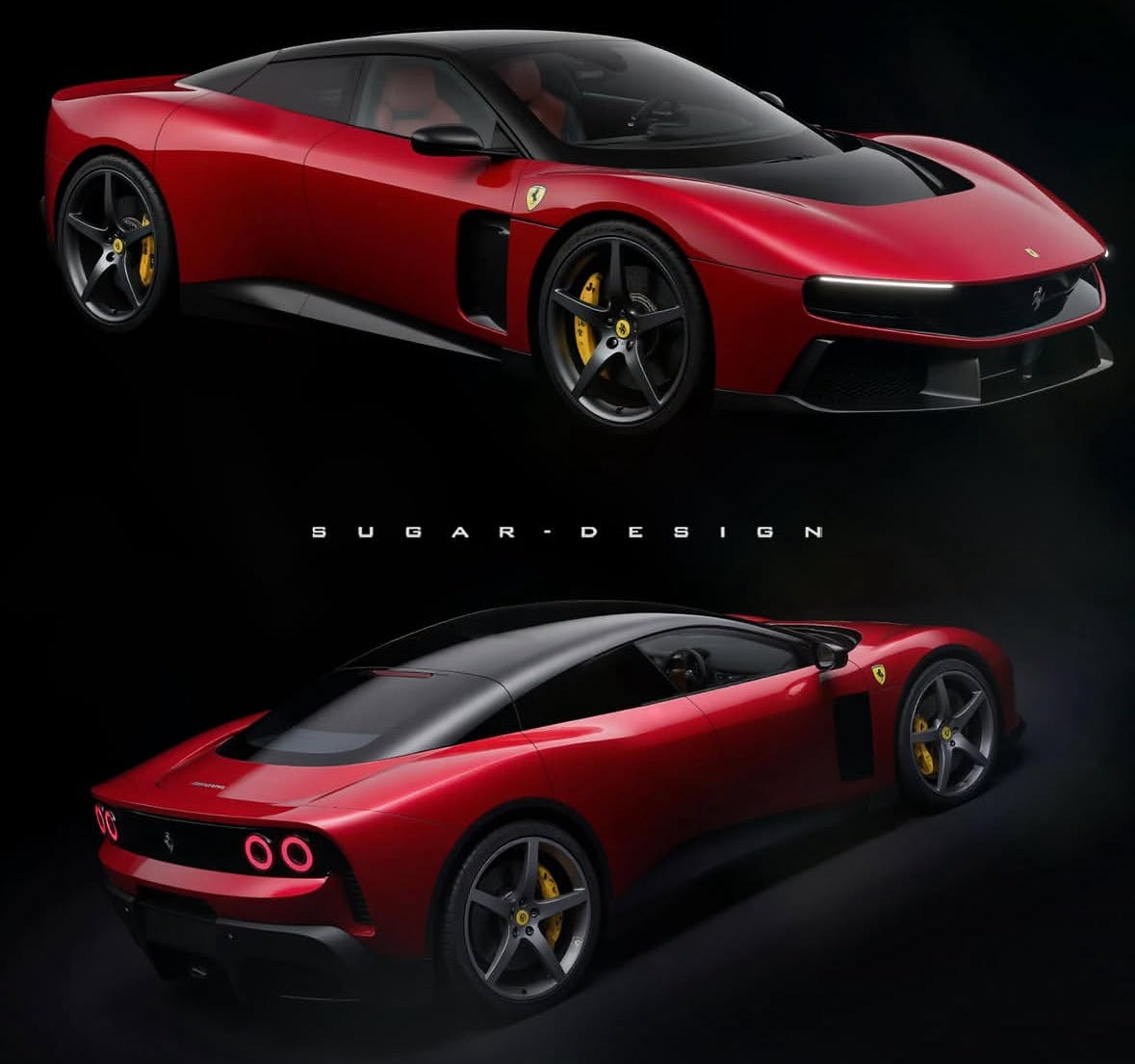
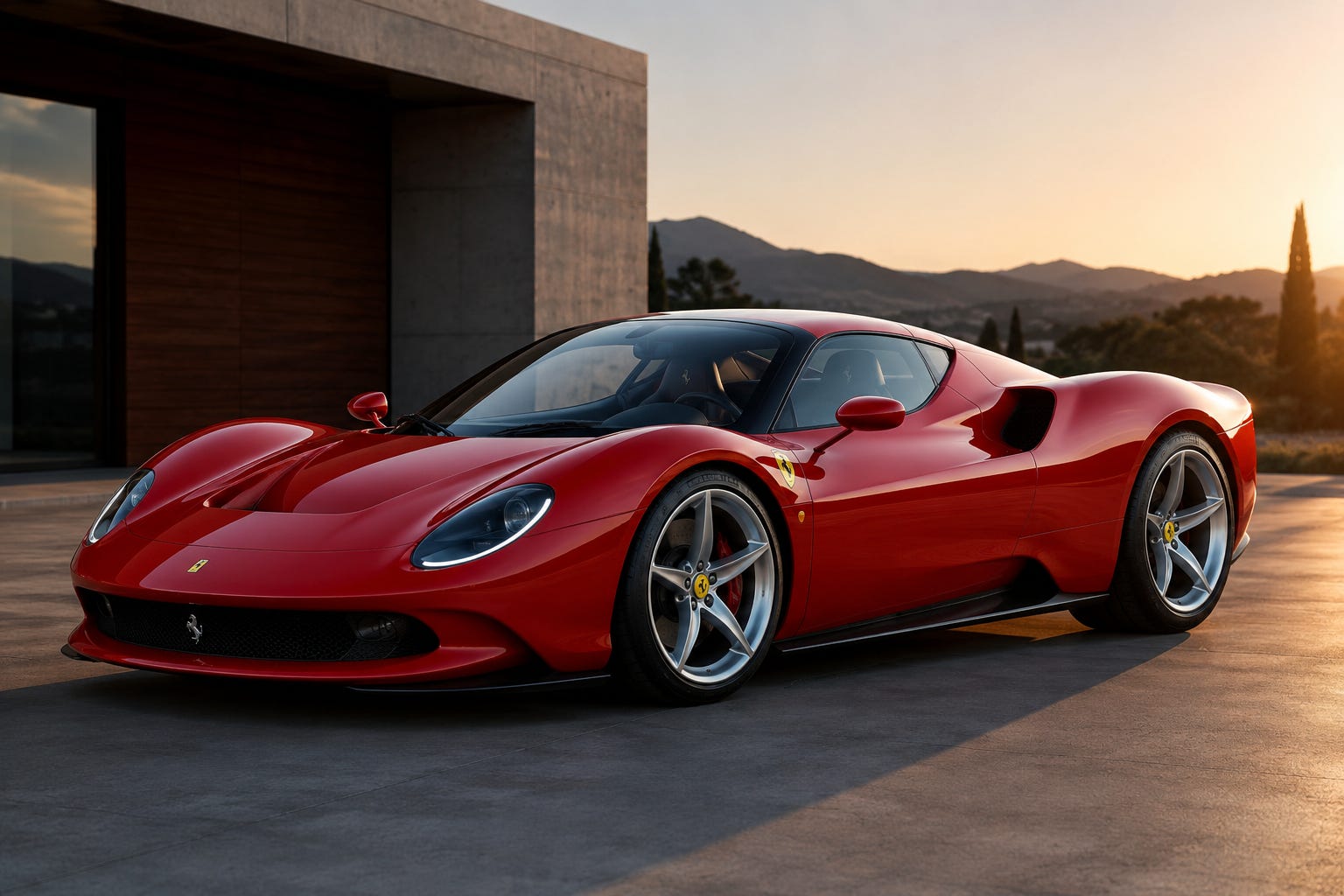
In terms of the way it looks, I like the P3/4-inspired AI render that heads this article very much, though if that’s too retro, these renders from Sugar Design on Instagram - ironically envisioning a different Luce - struck me as also being appropriate if a more modern language is desired.
The crucial part of this whole experiment, however, is that so much can remain the same: the manettino settings, the electronic support systems including ABS Evo and FIVE (Ferrari Integrated Vehicle Estimator), the dynamic capability, it all just needs to be applied to a car that doesn’t try and tear your head off every time you hit the accelerator pedal.
I also don’t envision this being a cheap car or a volume play; if anything, the opposite. Ferrari doesn’t want volume, it wants margin, so limit it to 999 units, charge accordingly and watch the VIPs fight over the allocation.
More importantly, this car could very well be the greatest driver’s machine ever built. For my money, a ~1350kg sports car with a 9500rpm, 400kW naturally-aspirated engine (albeit hybrid-assisted) sounds like a pretty ideal state of affairs.